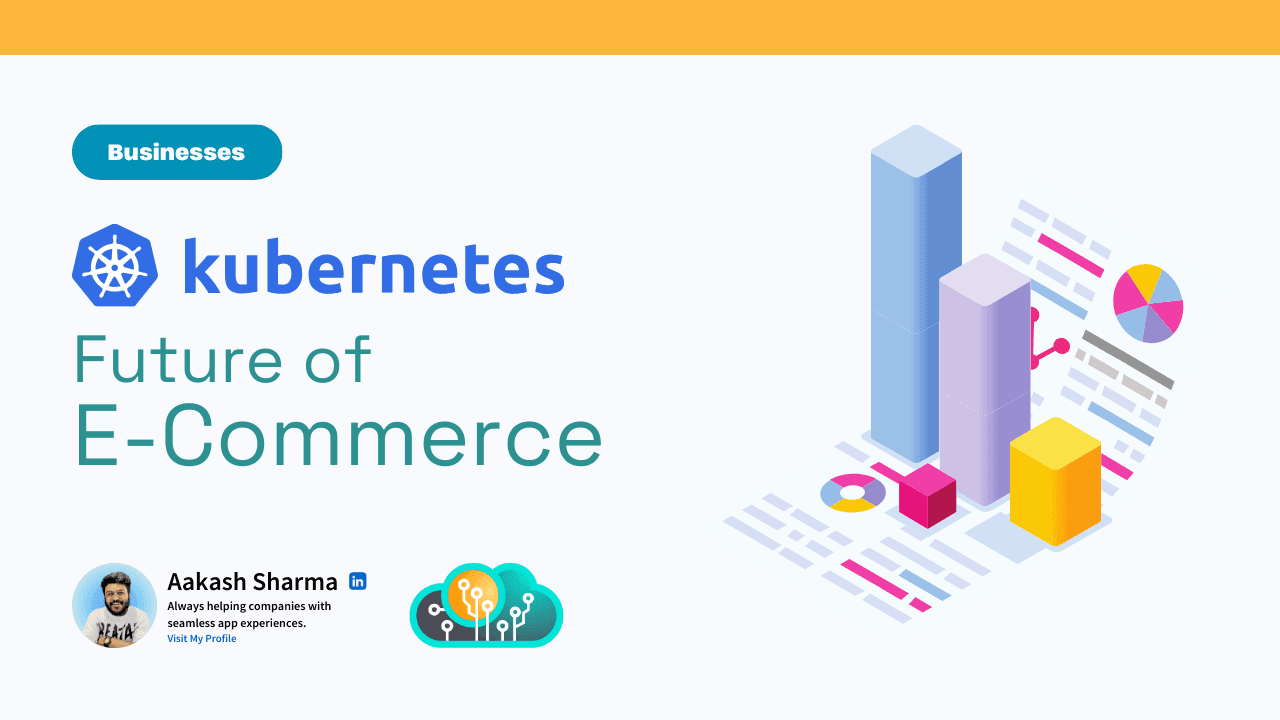
5 Statistics That Show Why Kubernetes Is the Future of E-Commerce
Why Kubernetes is the Future of E-Commerce - 5 Key Statistics
Introduction
E-commerce has grown exponentially in recent years, fueled by the convenience of online shopping and increasing consumer demand. As this growth continues, the infrastructure supporting e-commerce platforms must evolve to handle high traffic, ensure reliability, and optimize costs. Kubernetes, the leading container orchestration platform, has emerged as a transformative solution for modern e-commerce businesses.
Here are five compelling statistics that illustrate why Kubernetes is shaping the future of e-commerce.
---
1. 76% of Enterprises Have Adopted Kubernetes
What It Means for E-Commerce:
Kubernetes adoption is no longer limited to tech giants; it’s becoming a standard across industries, including e-commerce. With its ability to manage containerized applications, Kubernetes empowers online stores to scale seamlessly during peak traffic periods, such as holiday sales or product launches.
Real-World Impact:
- Enterprises report faster deployments and reduced downtime.
- Kubernetes' self-healing capabilities ensure high availability, critical for e-commerce platforms.
Why It Matters:
For e-commerce businesses, staying competitive requires adopting proven technologies like Kubernetes to deliver consistent performance and handle growth.
---
2. Kubernetes Reduces Infrastructure Costs by Up to 30%
What It Means for E-Commerce:
Managing cloud infrastructure efficiently is one of the biggest challenges for online stores. Kubernetes optimizes resource allocation, ensuring businesses only pay for what they use. Features like auto-scaling and spot instance utilization reduce unnecessary expenses.
Cost-Saving Examples:
- Auto-scaling dynamically adjusts resources based on traffic demand, preventing overprovisioning.
- Spot instances handle non-critical tasks at a fraction of the cost of on-demand instances.
Why It Matters:
E-commerce businesses can reinvest savings from infrastructure optimization into marketing, customer experience, and product development.
---
3. 99.9% Uptime Achieved with Kubernetes
What It Means for E-Commerce:
Downtime during high-traffic events like flash sales or Black Friday can result in significant revenue loss. Kubernetes’ self-healing features and multi-zone deployments ensure that applications remain online, even if individual components fail.
Key Features Supporting Uptime:
- Load balancing evenly distributes traffic across multiple pods.
- Self-healing automatically restarts failed pods, maintaining service continuity.
Why It Matters:
High availability is non-negotiable in e-commerce, and Kubernetes provides the reliability needed to maintain customer trust.
---
4. Kubernetes Powers Over 75% of Global Online Transactions
What It Means for E-Commerce:
Major players in e-commerce, including Amazon, Alibaba, and Shopify, rely on Kubernetes to support their platforms. This widespread adoption demonstrates Kubernetes’ capability to handle complex, large-scale operations.
Industry Examples:
- Large-scale e-commerce sites use Kubernetes to process thousands of transactions per second.
- Kubernetes’ scalability ensures smooth performance during global sales events.
Why It Matters:
Adopting Kubernetes allows small and mid-sized e-commerce businesses to leverage the same technology as industry leaders, leveling the playing field.
---
5. 85% of Kubernetes Users Report Faster Deployment Cycles
What It Means for E-Commerce:
Speed is critical in e-commerce, whether it’s rolling out new features, launching promotions, or fixing bugs. Kubernetes integrates seamlessly with CI/CD pipelines, enabling businesses to deploy updates quickly and reliably.
Deployment Enhancements:
- Canary deployments allow gradual rollouts to test changes safely.
- Blue-green deployments minimize downtime during updates.
Why It Matters:
E-commerce businesses can respond to market trends faster, improving customer satisfaction and gaining a competitive edge.
---
Why Kubernetes is Essential for the Future of E-Commerce
1. Scalability Without Limits
Kubernetes enables e-commerce platforms to scale dynamically, ensuring they can handle any traffic surge.
---
2. Cost Optimization
With Kubernetes, businesses can achieve significant savings by eliminating resource waste and leveraging cost-effective cloud solutions.
---
3. Enhanced Reliability
Kubernetes’ self-healing and load-balancing features ensure uninterrupted operations, even during unexpected failures.
---
4. Accelerated Innovation
Integrating Kubernetes with CI/CD pipelines speeds up development cycles, allowing businesses to innovate faster.
---
5. Multi-Cloud Flexibility
Kubernetes enables consistent management of workloads across multiple cloud providers, ensuring flexibility and reducing vendor lock-in.
---
How OnEggy Technologies Helps E-Commerce Businesses with Kubernetes
At OnEggy Technologies, we specialize in designing and implementing Kubernetes solutions tailored to the needs of e-commerce businesses.
Our Services Include:
- Custom Kubernetes Cluster Design: Optimize infrastructure for scalability and reliability.
- CI/CD Integration: Automate deployments and updates for faster time-to-market.
- Cost Optimization: Implement strategies to reduce cloud expenses.
- 24/7 Monitoring: Proactive support to ensure high availability and performance.
Results:
Our clients consistently achieve improved scalability, reduced costs, and enhanced customer experiences with Kubernetes.
---
FAQs
1. Why is Kubernetes important for e-commerce businesses?
Kubernetes enables seamless scaling, cost efficiency, and reliability, addressing the unique challenges of e-commerce platforms.
2. How does Kubernetes reduce downtime?
Kubernetes uses load balancing, self-healing, and failover mechanisms to ensure applications remain online during high-traffic events.
3. Can Kubernetes save costs for small e-commerce stores?
Absolutely. Kubernetes optimizes resource allocation, preventing overprovisioning and reducing cloud expenses for businesses of all sizes.
4. Is Kubernetes suitable for multi-cloud environments?
Yes, Kubernetes supports multi-cloud deployments, ensuring flexibility and reducing vendor lock-in.
5. How does OnEggy Technologies ensure successful Kubernetes implementation?
We provide end-to-end consulting, from infrastructure assessment to cluster design, CI/CD integration, and ongoing support.
---
Conclusion
Kubernetes is not just the future of e-commerce—it’s the present. These five statistics highlight its transformative impact on scalability, cost efficiency, reliability, and innovation. By adopting Kubernetes, e-commerce businesses can ensure they are prepared to meet the demands of a rapidly evolving market.
At OnEggy Technologies, we’re here to help your e-commerce business harness the power of Kubernetes.
Ready to future-proof your e-commerce platform? Contact OnEggy Technologies today and let’s get started!
AWS Cloud & DevOps Advisory Services
Explore our comprehensive modern DevOps, IaC orchestration, and AWS managed services portfolios.
Topics
Written by
OnEggy Engineering Team
We are senior cloud architects and DevOps experts building stable, compliance-ready infrastructure blueprints, custom pipeline automations, and full-stack cloud products.
Related articles
Keep reading- 01DevOpsDevOps Consulting and AWS with Kubernetes Managed ServicesIntegrating DevOps consulting with AWS and Kubernetes managed services revolutionizes software development and IT infrastructure management. By aligning development and operations, DevOps enhances communication, automation, and process efficiency. AWS offers scalable infrastructure, while Kubernetes optimizes containerized applications, boosting scalability, reliability, and cost-efficiency. This strategic integration fosters seamless CI/CD, real-time monitoring, and continuous improvement, maximizing cloud investments and competitive advantage.
- 02DevOpsHow Cloud Managed Services and DevOps Managed Services Transform Your IT InfrastructureOnEggy Technologies specializes in DevOps Services and Consulting, aiming to streamline and accelerate software development cycles. Our expert team integrates development and operations, offering bespoke solutions that enhance productivity and foster innovation. With a focus on automation, continuous integration (CI), and continuous deployment (CD), we help businesses optimize their processes and reduce time-to-market. Our services include comprehensive cloud infrastructure management, ensuring robust, scalable, and efficient operations. This strategic approach not only enhances software quality but also supports businesses in adapting to dynamic market demands, maintaining a competitive edge in the fast-evolving tech landscape.
- 03DevOpsRevolutionize IT with DevOps, AWS, and Kubernetes IntegrationIntegrating DevOps consulting with AWS and Kubernetes managed services transforms software development and IT infrastructure management. By uniting development and operations, DevOps promotes collaboration, automation, and streamlined workflows. AWS provides robust, scalable cloud infrastructure, while Kubernetes efficiently manages containerized applications, ensuring scalability, resilience, and cost optimization. This synergy enables seamless CI/CD pipelines, proactive monitoring, and continuous enhancement, driving operational efficiency and innovation. Together, these solutions unlock the full potential of cloud environments, empowering businesses to maximize their cloud investments, accelerate delivery cycles, and gain a competitive edge in an ever-evolving digital landscape.